Brown food in batches

Mushrooms are about 90 percent water, and most foods release plenty. In a packed pan that water can't boil off fast enough, so it pools and the food simmers near 100°C (212°F). Browning needs a dry surface well above that.
Leave space or cook in batches
Leave about a finger's width between pieces so steam can escape. If they don't fit, cook in two or three batches and wipe out any liquid between rounds. Batches add a few minutes and earn you a real crust.

Test yourself
Questions from the interactive lesson, with the answer and the why.
You tip a pound of sliced mushrooms into a medium pan and they turn gray and soggy. Why?
Their water pooled in the pan, so they steamed. Pooled water holds the pan near 100°C, so mushrooms steam instead of browning.
True or false: Filling the pan to the edge helps food brown, because more food holds the heat in.
False. A crowded pan traps steam, so food simmers instead of browning.
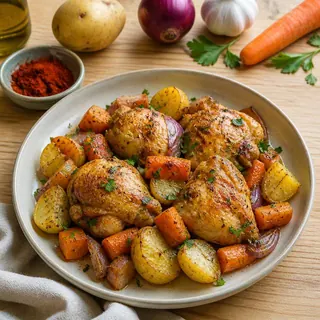
What went wrong? You dump 1 kg (2 pounds) of chicken pieces into a medium skillet. They come out pale and watery.
Too much food gave off water that the pan could not shed. The pooled liquid kept the pan near 100°C, so cook in batches or use a bigger pan.
Fill the blank: When a pan is overfull, food ___ in its own juices instead of browning.
When a pan is overfull, food simmers in its own juices instead of browning. Trapped juices keep the pan near 100°C, so the food simmers.
You're roasting broccoli at 220°C (425°F). How should you load the sheet pan?
One layer with space between pieces. Steam escapes and the edges meet dry heat, so they brown.
Crowded vs spaced vegetables
The same vegetables, two very different tops.
Do the 35-minute experiment