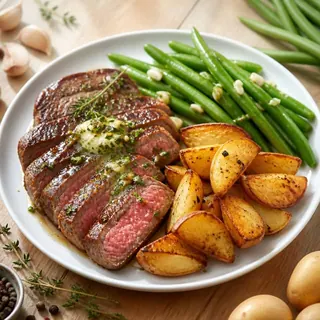
Rest meat before cutting

Heat tightens muscle fibers, and hot juice is thin and runny. Cut right away and it floods the board. Rest the meat and the juice thickens as it cools a little, so more stays in each slice.
How long to rest
Rest steaks and chops 5 to 10 minutes, big roasts 15 to 30. Tent them loosely with foil. Wrapping tightly traps steam, and steam softens the crust you just built.
Meat keeps cooking while it rests
The outside is hotter than the center, so heat keeps flowing inward after cooking stops. A steak gains about 3 to 5°F (2 to 3°C), a big roast 10 to 15°F (5 to 8°C). Pull the meat that far below your target.

Test yourself
Questions from the interactive lesson, with the answer and the why.
A steak is cut open straight off the grill and juice floods the board. What does a 5 to 10 minute rest change?
More juice stays in the meat. The fibers relax and the juices thicken as the meat cools, so less runs out.
True or false: Meat keeps getting hotter inside for a few minutes after you take it off the heat.
True. The hot outside keeps pushing heat inward and raises the center by a few degrees.
What went wrong? You pull a steak off the grill and cut into it right away. Juice floods the board and the slices look dry.
It needed to rest first. Resting lets the juices thicken and settle, so less runs out when you cut.
Fill the blank: Carved right away, a steak loses a lot of juice, so let it ___ first.
Carved right away, a steak loses a lot of juice, so let it rest first. A short rest lets juices thicken and settle so more stays in the meat.
You want juicy slices without overcooking. Which plan works best?
Pull it 3 to 5°F (2 to 3°C) early, then rest it. Carryover finishes the cook while resting keeps the juice in.
Cut now or wait
Watch where the juice goes.
Do the 20-minute experiment