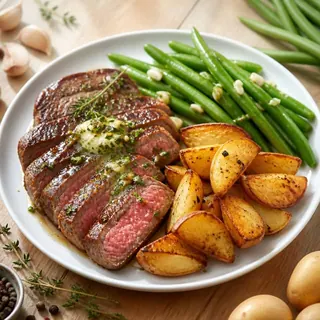
Don't crowd the roasting pan

Vegetables are mostly water. In a 220°C (425°F) oven that water turns to steam, and the steam needs somewhere to go. Leave a finger-width between pieces so the edges dry and brown. Piled-up pieces trap steam and go soft.
Roast at 220°C (425°F)
At 220°C (425°F), surface water boils off fast and browning starts. At 175°C (350°F), vegetables soften before they color. Dense roots like potatoes take 30 to 40 minutes, and soft vegetables like zucchini take 15 to 20.
Cut pieces the same size
Cut pieces to about the same size, around 2.5 to 4 cm (1 to 1.5 inches). Small bits burn while big ones stay raw. Start dense vegetables like potatoes first. Add quick ones like asparagus for the last 10 minutes.

Test yourself
Questions from the interactive lesson, with the answer and the why.
You roast 2 kg of broccoli on one small pan and it comes out soft and pale. What fixes it?
Use two pans so steam can escape between pieces. Gaps let steam out so dry heat reaches the edges.
True or false: Crowded vegetables brown better because the pan holds more heat.
False. Crowded pieces release steam with nowhere to go, so they stew instead of browning.
What went wrong? You pile vegetables on a pan, cover it with foil and roast it at 425°F. They come out soft and pale.
The foil traps the steam. Roasting needs dry air around the food, and foil holds steam in.
Fill the blank: Before roasting, toss vegetables with about a tablespoon of ___ per 450 g (1 lb).
Before roasting, toss vegetables with about a tablespoon of oil per 450 g (1 lb). Oil carries heat to every bump and edge, so browning is even.
A pan of potatoes is piled 3 layers deep. What are they like after 40 minutes at 220°C?
Soft and pale, steamed by their own moisture. Trapped steam keeps the surface wet, so it never browns.
Crowded pan vs roomy pan
Same vegetables. One pan is having a better time.
Do the 35-minute experiment