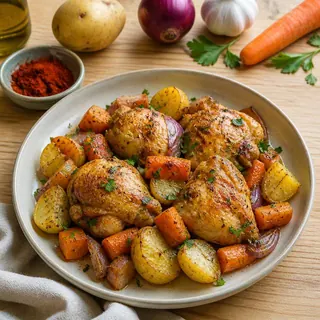
Lemon herb roast: zest, juice, herbs

The yellow zest holds the aromatic oils, including limonene, that make a lemon smell like a lemon. The juice holds citric acid, which is the sour. The white pith between them is bitter, so peel off only the yellow.
Woody herbs early, tender herbs late
Rosemary and thyme are woody and tough, so they can take a long roast. Tuck them under the skin or around the pan, where they are shielded from the harshest heat. Parsley and basil are tender and blacken in an oven, so scatter them on at the end.

Test yourself
Questions from the interactive lesson, with the answer and the why.
Where does most of a lemon's aroma come from?
Aromatic oils in the yellow zest. The oils in the zest, such as limonene, carry the lemon smell.
True or false: The white pith under the zest is the most aromatic part of a lemon.
False. The pith is bitter, and the zest is where the aromatic oils live.
What went wrong? You scatter chopped basil and parsley on a chicken, then roast it at 220°C (425°F) for 45 minutes. The herbs come out black and bitter.
Tender herbs scorched in long, dry heat. Add soft herbs after roasting, or use woody ones that can take the heat.
Fill the blank: Lemon juice gets its sourness mainly from ___ acid.
Lemon juice gets its sourness mainly from citric acid. Citric acid is named for citrus and is the main acid in lemons.
You want lemon aroma built into the roast itself. What goes on before the oven?
Zest rubbed in with salt and oil. The zest oils season the meat, and the rub keeps them close to it.
Why pat the chicken dry before roasting?
Surface water must evaporate before the skin can brown. A wet surface stays near 100°C (212°F) until it dries, which delays browning.